After-School Care: Applying for Gakudo
A public-service conversation about eligibility, work schedules, fees, and what happens if there is a waiting list.
A working parent asks city staff about applying for after-school care, pickup time, fees, and waiting lists.
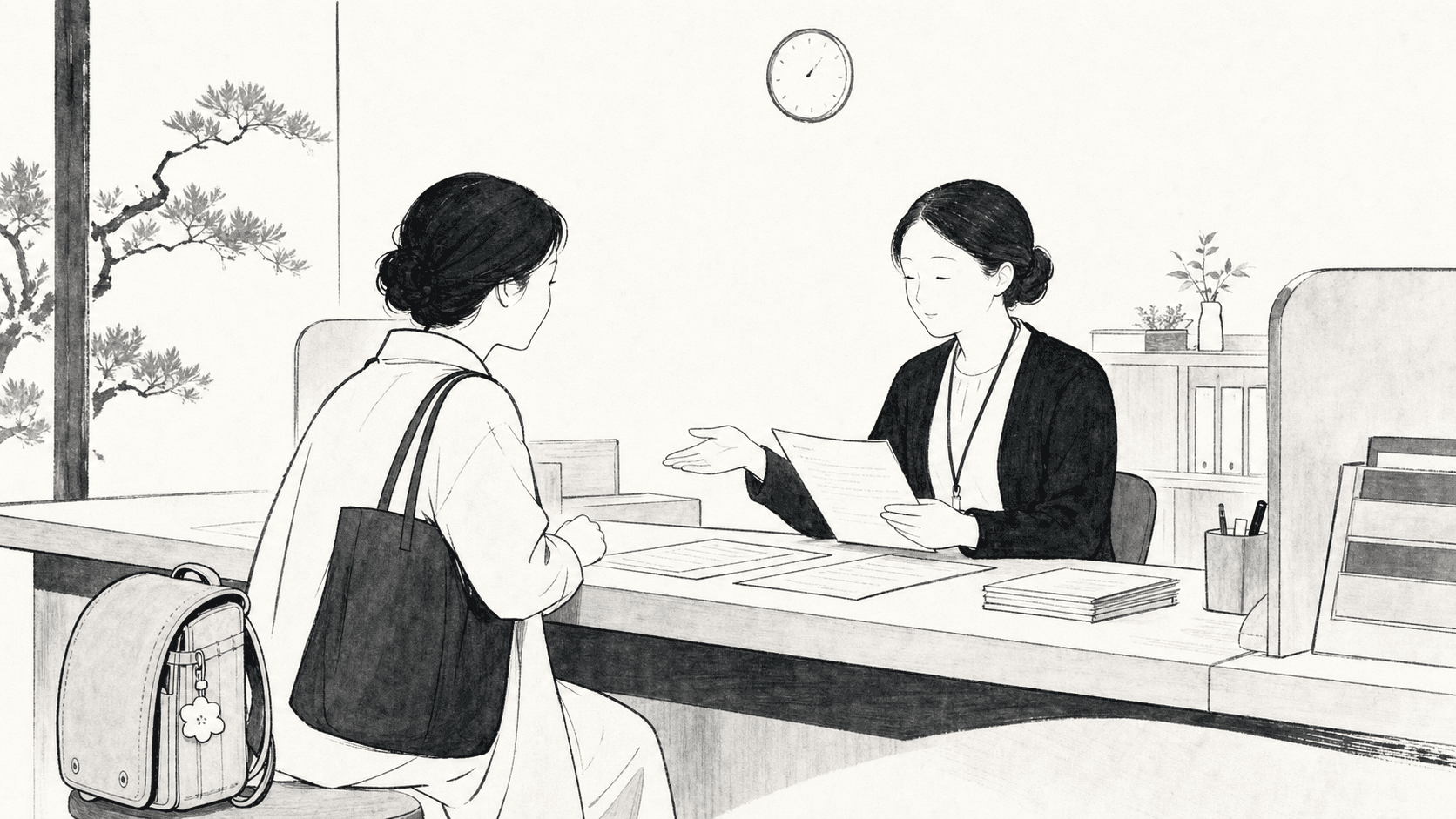
Conversation
保護者
Line 1
職員
Line 2
はい、こちらです。りようするには、ほごしゃの しゅうろうしょうめいしょが ひつようです。
はい、こちらです。利用するには、保護者の就労証明書が必要です。
Yes, this is the place. To use it, a guardian's employment certificate is required.
保護者
Line 3
職員
Line 4
はい。きんむばしょに かんけいなく、きんむじかんを かくにんする ために ひつようです。
はい。勤務場所に関係なく、勤務時間を確認するために必要です。
Yes. Regardless of workplace, it is needed to confirm work hours.
保護者
Line 5
職員
Line 6
保護者
Line 7
職員
Line 8
保護者
Line 9
職員
Line 10
あきじょうきょうに よって かのうです。けっかは らいげつ メールで おしらせします。
空き状況によって可能です。結果は来月メールでお知らせします。
It may be possible depending on availability. We will notify you of the result by email next month.
Grammar Used
〜について
Means about or regarding a topic in discussion, questions, and explanations.
場合は
Means in the case that or when a certain situation happens.
〜わけではない
Means it does not mean that, often softening or correcting an assumption.
〜によって
Means depending on, by, or because of, often showing that results vary by case.
Teaching Notes
This public-service conversation raises the difficulty with eligibility rules and exceptions.
〜についてstarts the formal inquiry.場合はframes administrative cases.〜わけではないsoftens a realistic concern about waitlists.〜によってexplains decisions based on schedule and availability.
Lesson progress
Mark this conversation as learnt when you are done practicing it.