Classroom: Friendship Problem
A sensitive parent-teacher conversation about classroom trouble, observations, and avoiding blame.
A parent speaks carefully with a teacher about a child feeling excluded by classmates.
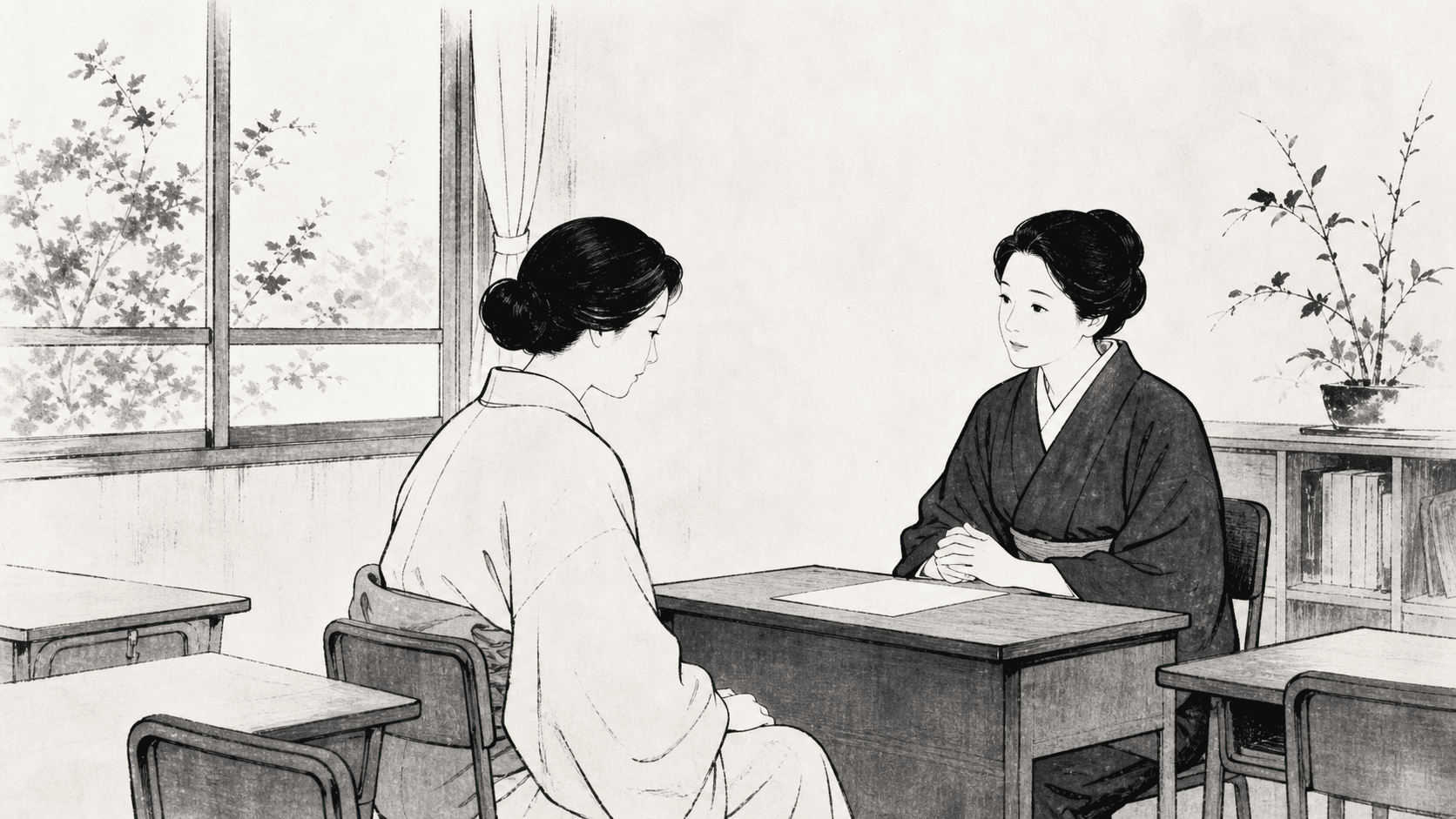
Conversation
保護者
Line 1
きょうは、むすめの ともだちかんけいに ついて すこし ごそうだんしたくて きました。
今日は、娘の友だち関係について少しご相談したくて来ました。
I came today because I would like to consult you about my daughter's friendships.
先生
Line 2
きて くださって ありがとうございます。どのような ようすですか。
来てくださってありがとうございます。どのような様子ですか。
Thank you for coming. What has been happening?
保護者
Line 3
さいきん、やすみじかんに ひとりで いる ことが おおい ようです。ほんにんは あまり はなしたがりません。
最近、休み時間に一人でいることが多いようです。本人はあまり話したがりません。
Recently, she seems to be alone often during recess. She does not really want to talk about it.
先生
Line 4
保護者
Line 5
先生
Line 6
わかりました。まずは こどもたちから べつべつに はなしを きく べきだと おもいます。
わかりました。まずは子どもたちから別々に話を聞くべきだと思います。
Understood. I think we should first speak with the children separately.
保護者
Line 7
先生
Line 8
もちろんです。だれかを きめつけるのでは なく、じじつを かくにんします。
もちろんです。誰かを決めつけるのではなく、事実を確認します。
Of course. We will confirm the facts without assuming someone is at fault.
保護者
Line 9
Grammar Used
〜について
Means about or regarding a topic in discussion, questions, and explanations.
〜わけではない
Means it does not mean that, often softening or correcting an assumption.
〜ようです
Says that something seems to be true based on what you notice.
〜べきだ
Expresses what someone should do based on duty, rules, or judgment.
Teaching Notes
This conversation practices tactful language for a sensitive classroom issue.
〜についてintroduces the concern calmly.〜ようですreports an observed situation without overclaiming.〜わけではないavoids blaming one side.〜べきだと思いますgives a careful recommendation.
Lesson progress
Mark this conversation as learnt when you are done practicing it.