Fishing Permit: River Rules
A formal conversation about fishing permits, seasonal restrictions, and following local river rules.
A visitor asks a fishery cooperative staff member about river fishing permits, restricted seasons, catch limits, and penalties.
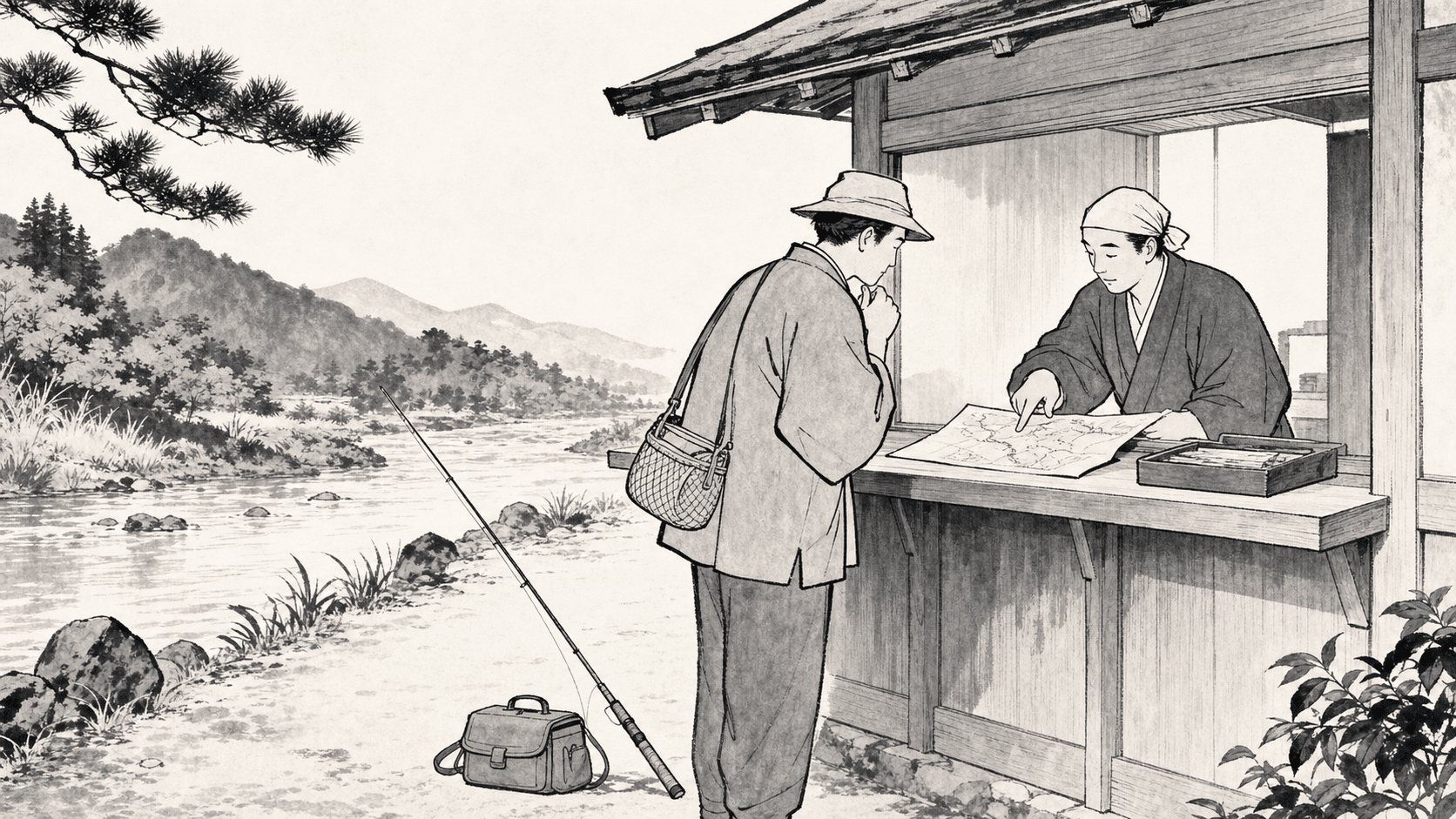
Conversation
釣り人
Line 1
職員
Line 2
はい。この くいきに おいては、つりを する かた ぜんいんに ゆうぎょけんが ひつようです。
はい。この区域においては、釣りをする方全員に遊漁券が必要です。
Yes. In this area, everyone who fishes needs a permit.
釣り人
Line 3
職員
Line 4
釣り人
Line 5
きんりょうきかんや もちかえれる かずは、さかなの しゅるいに よって ちがいますか。
禁漁期間や持ち帰れる数は、魚の種類によって違いますか。
Do closed seasons and the number I can take home differ depending on the type of fish?
職員
Line 6
釣り人
Line 7
きそくを しらなかった ばあいでも、いはんに なるのでしょうか。
規則を知らなかった場合でも、違反になるのでしょうか。
Even if someone did not know the rules, would it still be a violation?
職員
Line 8
釣り人
Line 9
では、ちずと きそくを かくにんした うえで、つりばを きめます。
では、地図と規則を確認した上で、釣り場を決めます。
Then I will decide where to fish after checking the map and rules.
Grammar Used
〜において
Means in, at, or during a place, field, or situation in formal speech.
〜に従って
Means according to or following rules, instructions, changes, or guidance.
〜上で
Means after doing something or on the basis of something, often in formal decisions and procedures.
〜さえ
Means even, or if only, depending on the pattern and context.
Teaching Notes
This conversation practices formal rule confirmation before a recreational activity.
〜においてsounds official when explaining where rules apply.〜に従ってconnects the learner's action to local guidance.〜上でframes checking rules as a required step before deciding.〜さえis used to test the mistaken idea that a permit alone is enough.
Lesson progress
Mark this conversation as learnt when you are done practicing it.