Second Interview: Work Style and Expectations
A second interview conversation about expectations, teamwork, and handling ambiguity.
A manager asks about overtime, teamwork, deadlines, and how the applicant handles unclear instructions.
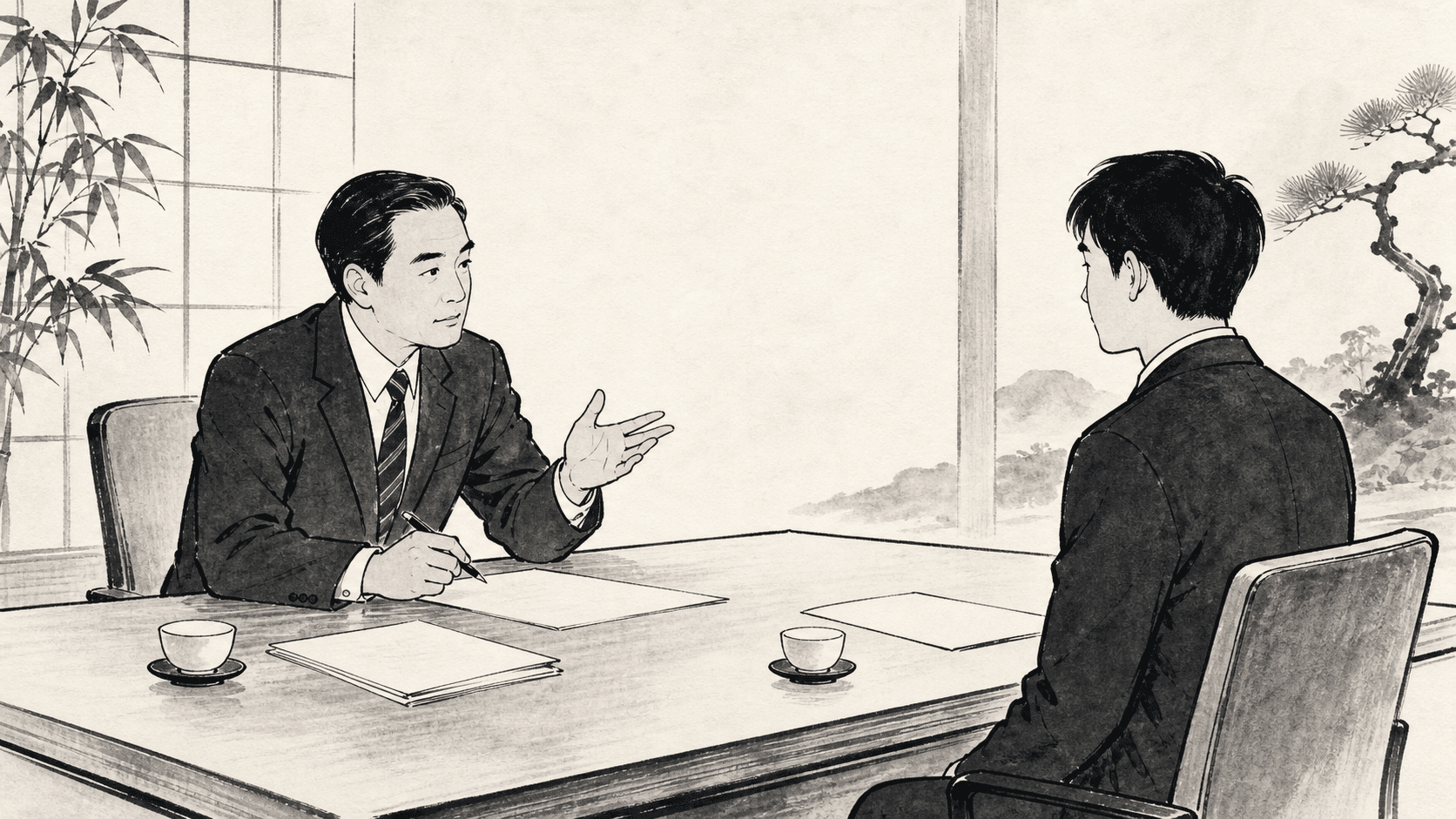
Conversation
部長
Line 1
にじ めんせつでは、はたらきかたに かんして すこし ぐたいてきに うかがいます。
二次面接では、働き方に関して少し具体的に伺います。
In the second interview, I will ask a bit more specifically regarding work style.
応募者
Line 2
はい。よろしく おねがいいたします。
はい。よろしくお願いいたします。
Yes. Thank you.
部長
Line 3
しめきり まえは、ざんぎょうが はっせいする ことが あります。その てんは もんだい ありませんか。
締め切り前は、残業が発生することがあります。その点は問題ありませんか。
Before deadlines, overtime sometimes occurs. Is that point okay?
応募者
Line 4
部長
Line 5
チームによっては、きゅうな いらいも あります。ゆうせん じゅんいは どのように きめますか。
チームによっては、急な依頼もあります。優先順位はどのように決めますか。
Depending on the team, there are also sudden requests. How do you decide priorities?
応募者
Line 6
部長
Line 7
応募者
Line 8
部長
Line 9
まわりを まきこみながら すすめる しごとが おおいですが、その てんは いかがですか。
周りを巻き込みながら進める仕事が多いですが、その点はいかがですか。
There is a lot of work that moves forward while involving others. How do you feel about that?
Grammar Used
〜に関して
Means regarding or concerning and sounds more formal than 〜について.
〜わけではない
Means it does not mean that, often softening or correcting an assumption.
〜ようにする
Means to try to do something or make a habit of doing it.
〜によって
Means depending on, by, or because of, often showing that results vary by case.
Teaching Notes
Second interviews often test fit, judgment, and communication style.
〜に関してframes a formal interview topic.〜わけではないsoftens a potentially negative answer about overtime.〜ようにするdescribes work habits.〜によってexplains that expectations change by team.
Lesson progress
Mark this conversation as learnt when you are done practicing it.